
How the TYPHON STOMP V900 Handles Tight Jobsites
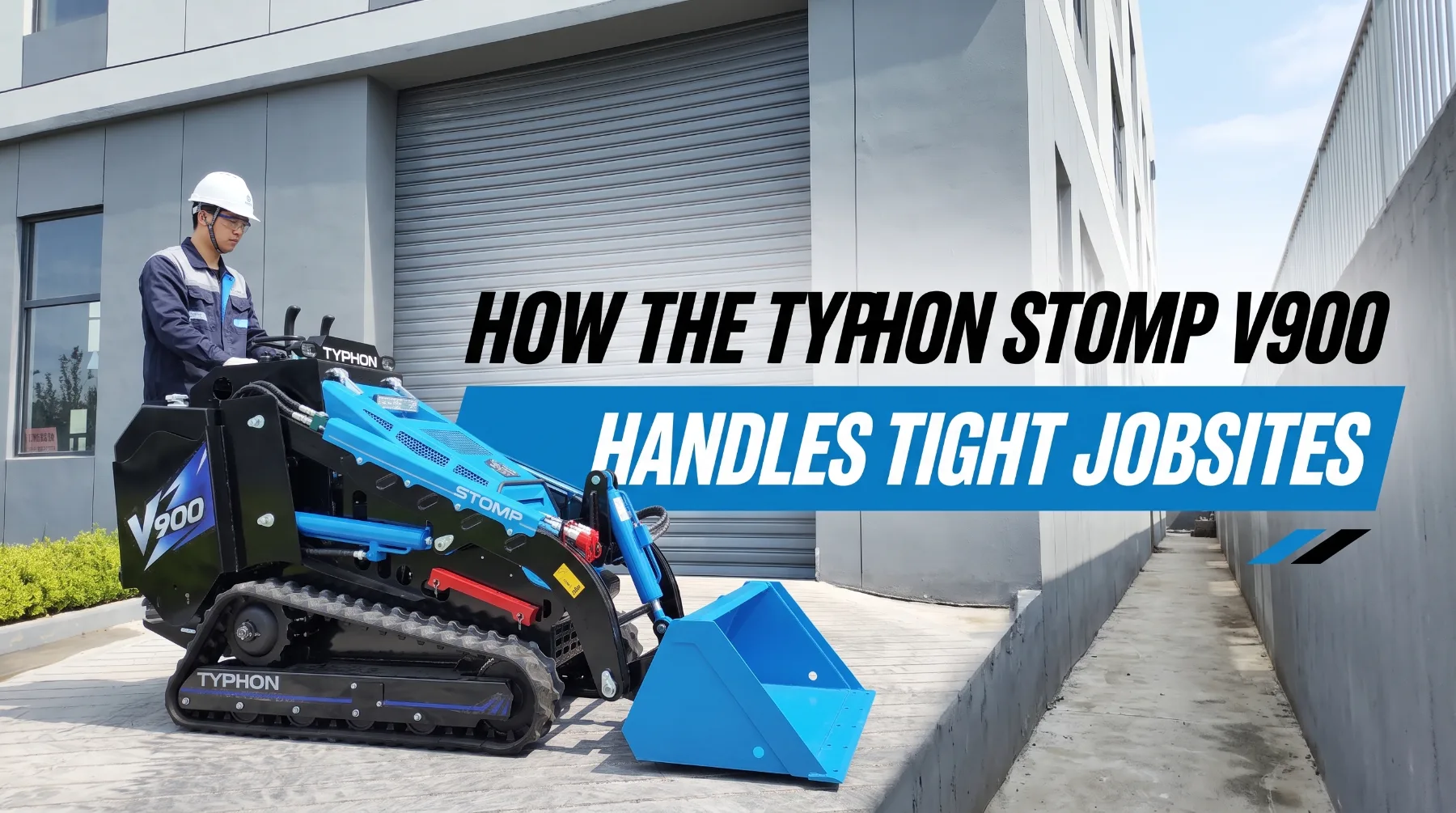
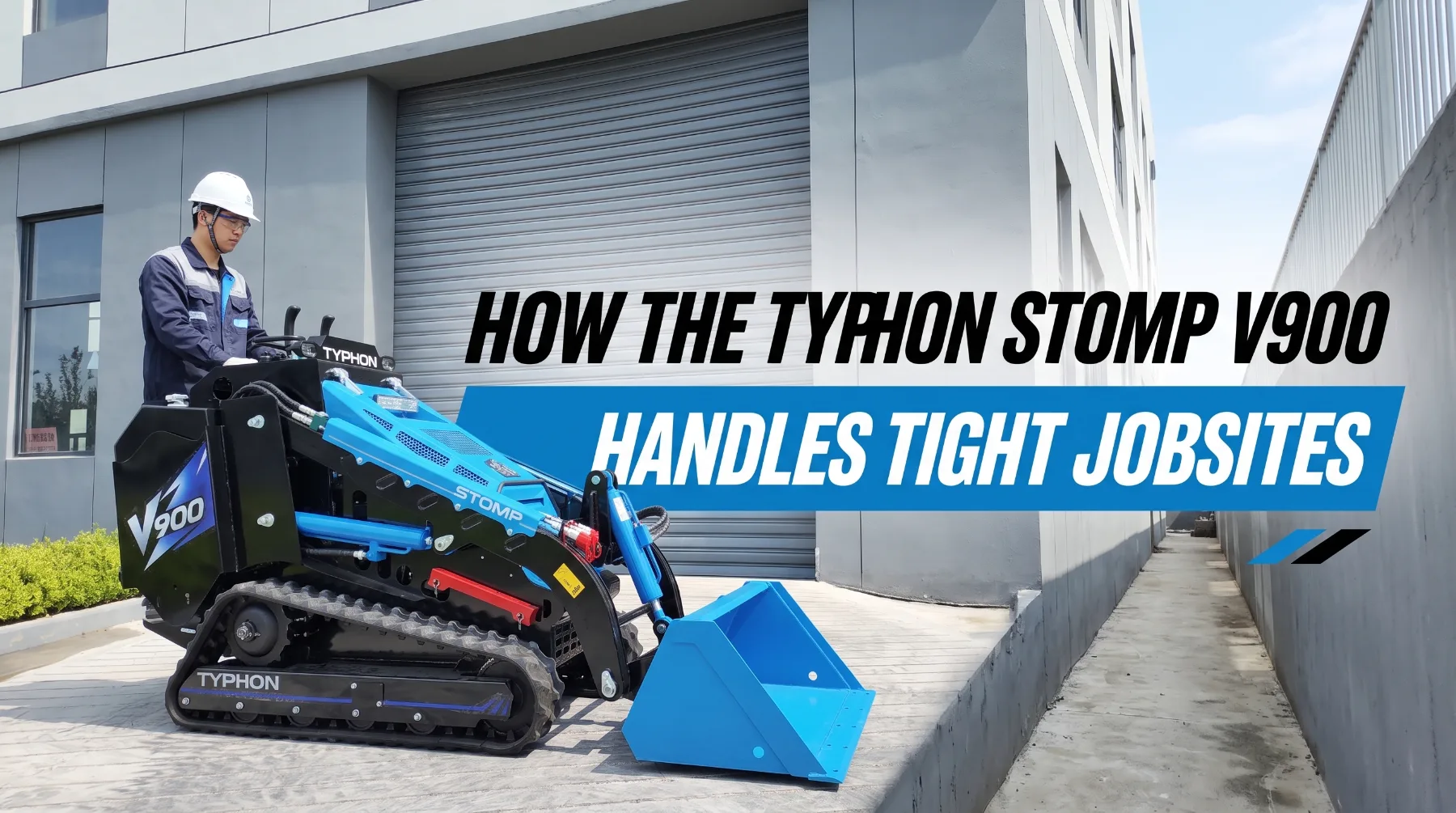 A remodeling crew pulls up to a downtown row house where the entire backyard sits behind a thirty-six-inch gate, boxed in by a brick wall on one side and the neighbor's fence on the other. Inside that cramped square waits a full day of work: haul crushed stone from the front curb to the back, dig footings for a new deck, and clear a heap of broken concrete from a torn-out walkway. A standard skid steer can't come close to fitting the opening, and wheeling every load by hand would swallow the schedule whole. So the operator rolls a TYPHON STOMP V900 through the gate with inches to spare, pivots it neatly in the middle of the yard, and works every corner of the space without scarring the lawn or bumping a wall. By quitting time, a job that looked impossible for a machine is done, and the V900 loads back on the trailer none the worse for wear. Tight jobsites are exactly where the V900 proves its worth, and its ability to work in cramped, awkward spaces comes down to several design choices that pull together on the job. Knowing how each one helps lets you plan confined work with confidence and get the most from the machine.
A Frame Built to Clear the Opening
Width is the first hurdle on any tight jobsite, and the V900 is sized to slip through the gaps that stop bigger machines cold. Its slim frame measures narrow enough to pass through a standard garden gate, a single doorway, or the gap between a house and a property line, so you can bring real lifting and digging power to spaces that used to mean shovels and wheelbarrows. That compact footprint is the difference between working a backyard by machine and working it by hand. Height and length matter just as much once the machine is through the gate. A low profile lets the V900 duck under low branches, deck framing, and doorway headers that would catch a taller machine, while its short overall length keeps it from hanging up when you crest a threshold or nose into a confined corner. The machine was shaped to fit the spaces people actually work in, not just open lots. Getting to the gate in the first place stays simple too. Because the V900 is light and compact, it rides on a modest trailer behind a half-ton truck, so you reach the jobsite without wrestling a heavy hauling rig down a narrow residential street. What this means: the V900's narrow, low, and short frame clears standard gates, doorways, and tight gaps that block full-size equipment, putting mechanical muscle exactly where the confined work waits.
Pivoting Where There's No Room to Turn
Turning is the next challenge once the machine is inside a boxed-in space, and the V900 answers it with a turning radius tight enough to spin almost in place. Rather than needing a long arc to change direction, the machine pivots on its own footprint, so the operator can reverse course in a narrow trench, swing toward a new pile, or line up on a doorway without a string of forward-and-back corrections. That agility keeps the work flowing where a wider-turning machine would stall. Zero-radius steering is what makes those tight moves possible. By driving one side of the undercarriage forward while the other holds or reverses, the V900 rotates around its center, letting the operator reposition in the middle of a cramped yard or a packed alley without touching the walls or fences that crowd the space. This is the same trick that lets the machine work confidently between parked cars, garden beds, and finished structures. Short, controlled movements round out the machine's handling in close quarters. Because the V900 responds cleanly to small inputs, the operator can inch forward, nudge sideways, and stop precisely rather than lurching, which keeps every maneuver deliberate when a wall sits just beyond the bucket. Key takeaway: with a tight turning radius and zero-radius steering, the V900 pivots in place and repositions cleanly in cramped quarters, working spaces far too small for a wider-turning machine.
Gripping the Ground Underfoot
Traction decides how well any machine performs once the surface turns soft, loose, or uneven, and the V900's undercarriage is built to hold its footing in confined conditions. Tracks spread the machine's weight across a wide contact patch, so it grips mud, gravel, sand, and torn-up ground without digging in or spinning out, keeping steady progress even when a tight jobsite offers poor footing. That grip means the machine keeps working when a wheeled loader would bog down.
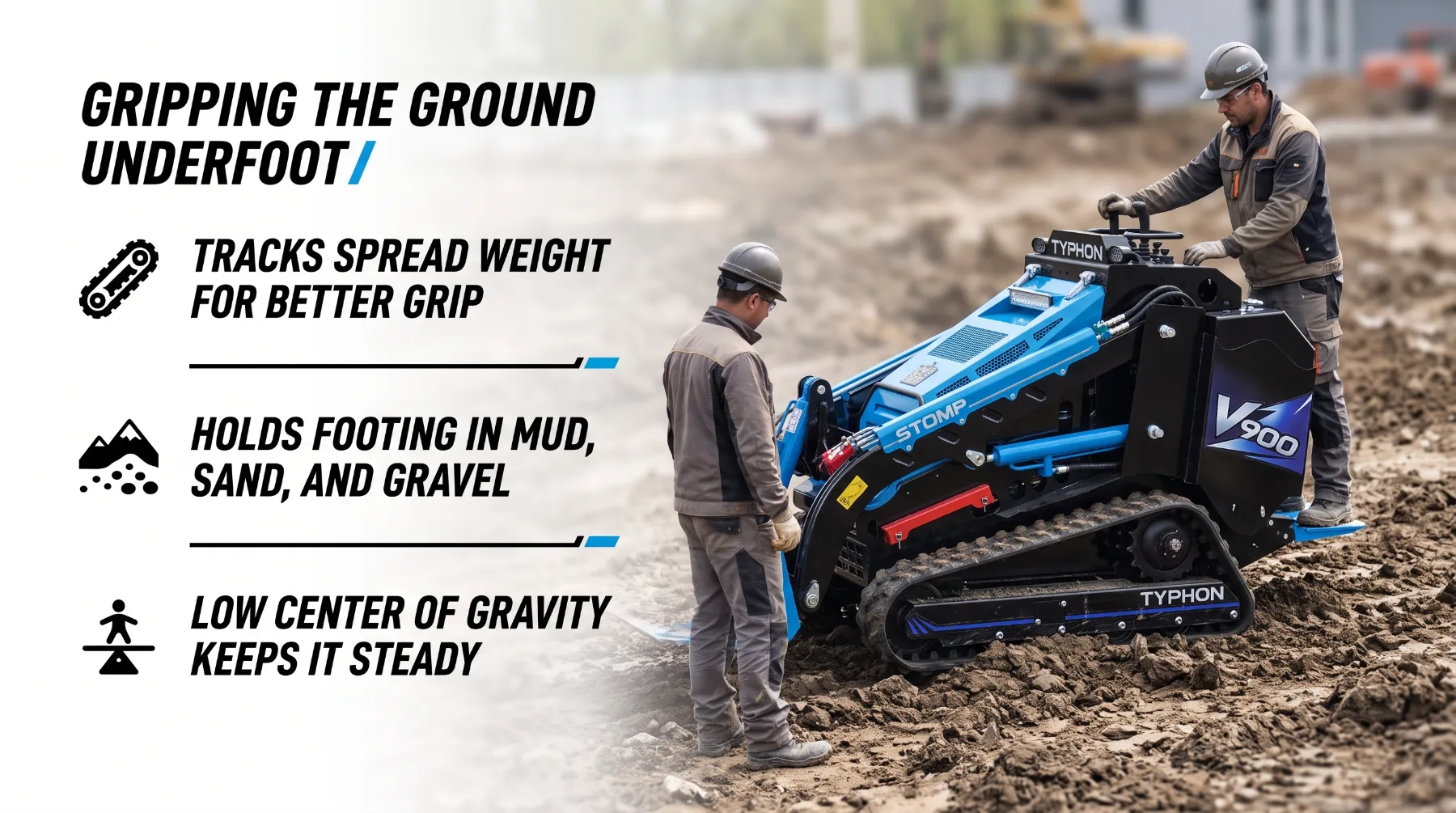 Stability comes with that spread of weight, which matters when the work happens on slopes or broken ground hemmed in by obstacles. A low center of gravity and a planted stance keep the V900 steady as it climbs a small grade, crosses a rut, or lifts a load in a corner where there's no room to reposition for balance. The machine feels sure-footed in the very spots where confidence matters most. Ground clearance keeps the undercarriage working over debris and uneven terrain. Enough space beneath the frame lets the V900 crawl over curbs, tree roots, and construction rubble without hanging up, so a cluttered, confined site doesn't strand the machine mid-task. What this means: the V900's tracks deliver grip, stability, and clearance across the soft, loose, and cluttered surfaces common on tight jobsites, keeping it moving where footing runs poor and space is scarce.
Seeing and Steering the Work Up Close
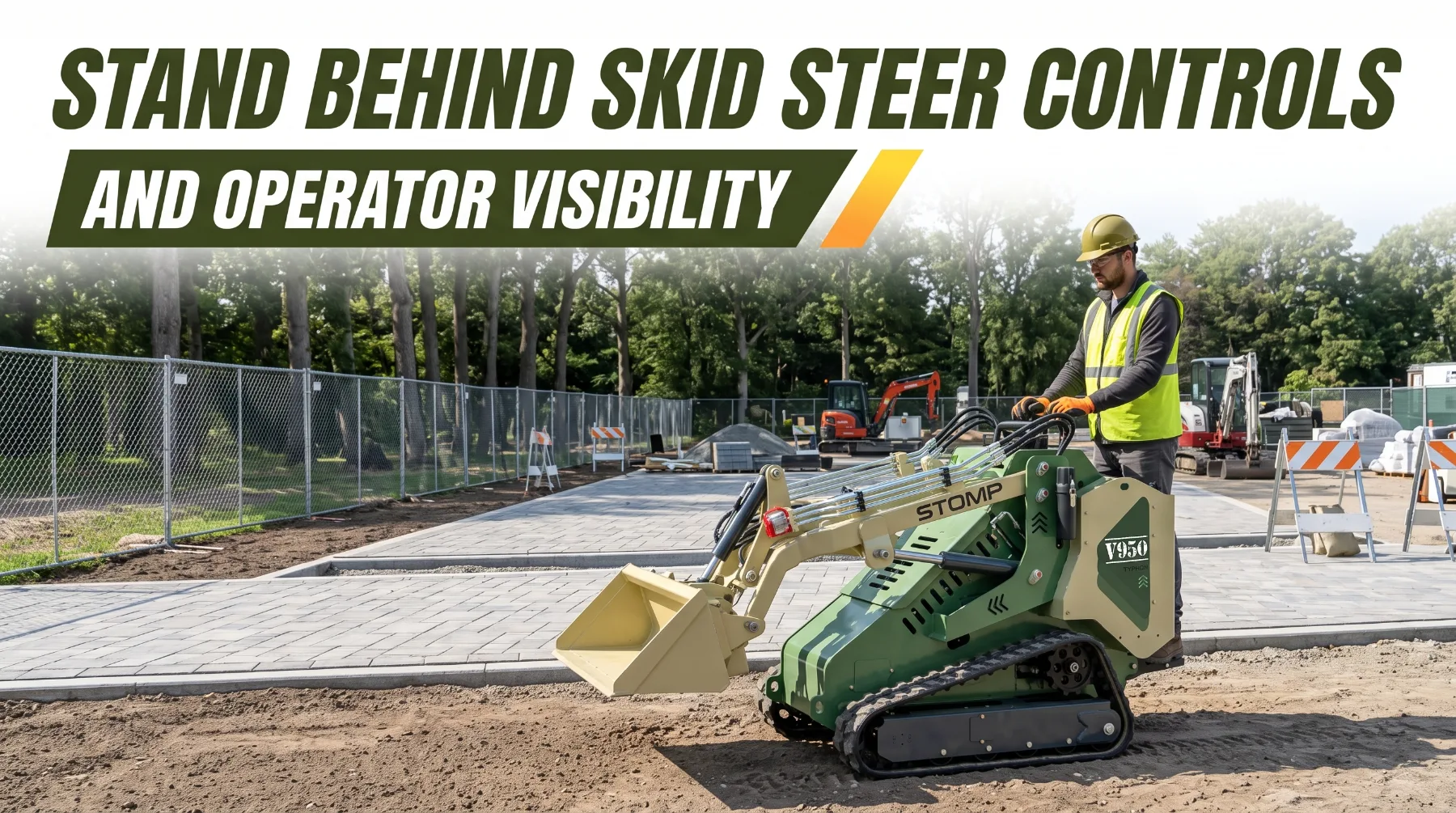
Sightlines make or break precision when walls and fixtures crowd the machine, and the V900's stand-on platform puts the operator right at the working end with a clear view of the attachment. Standing close to the action, the operator watches the bucket edge, the fork tips, or the auger point line up with the target directly rather than craning around a bulky cab, which keeps close-quarters work accurate when a mistake means clipping a wall. That direct view is a real advantage in confined spaces. Awareness of the machine's edges keeps the operator safe among obstacles. Because the platform sits low and open, the operator senses where the frame, the tracks, and the load sit in relation to fences, beds, and structures, so judging the inches between the machine and a hazard becomes second nature. Working tight is far less nerve-wracking when you can see and feel exactly where every part of the machine is. Responsive controls turn that clear view into precise action. Proportional inputs let a light touch produce a slow, delicate motion for threading a load into a corner, while a firmer push delivers the speed and power for heavier work, so the operator matches the machine's pace to the space at hand. Key takeaway: the V900's stand-on platform, open sightlines, and responsive controls let the operator see the work up close and steer with precision, keeping tight, obstacle-heavy jobs accurate and safe.
Running Attachments in Cramped Conditions
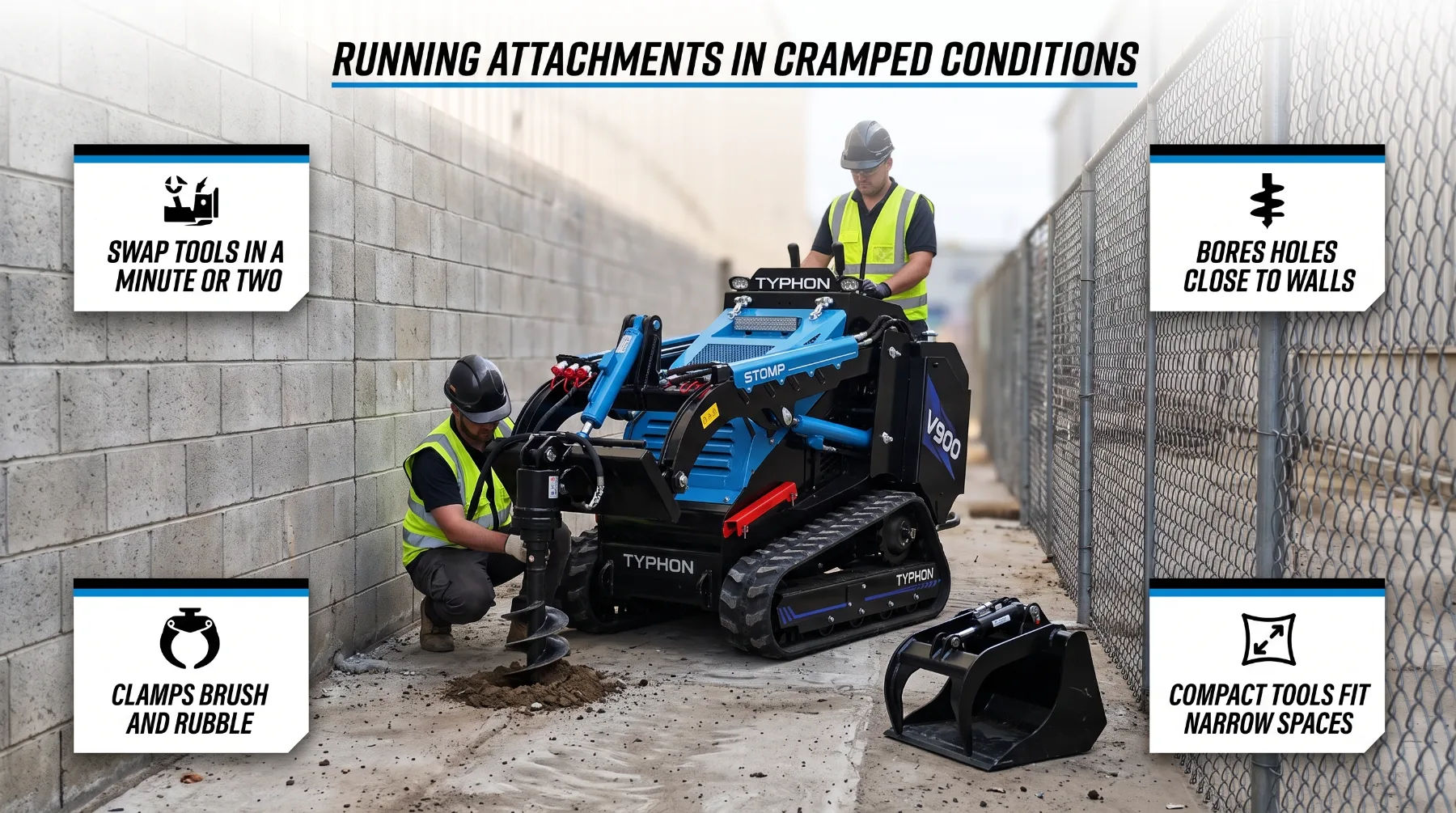 Versatility is what keeps the V900 productive when a tight site throws a dozen different tasks at you, since its quick coupler swaps one tool for another without leaving the space. A bucket scoops and grades, forks lift and carry pallets, an auger bores post holes, and a grapple clamps brush and rubble, so the operator changes tools in a minute or two and keeps working rather than driving out to reconfigure. That flexibility matters most where there's no room to stage several machines. Compact tool geometry helps the attachments work within the confines of a small space. Because the V900 and its attachments are scaled to the machine, an auger drills a hole close to a wall, a trencher cuts a line along a fence, and a leveler smooths a base in a narrow strip without demanding the wide berth a full-size setup would need. The tools fit the space as naturally as the machine itself. Powered attachments extend that reach without adding bulk. By feeding hydraulic flow through the auxiliary lines, the V900 runs a breaker on stubborn concrete or a stump grinder on an old root right in the cramped corner where the problem sits, so demanding work gets done in place. What this means: the quick coupler and compact, powered attachments let the V900 tackle digging, drilling, grading, and breaking within tight confines, keeping one machine productive across many jobs where space is limited.
Treading Lightly on Finished Ground
Care for the surface underneath is often the deciding factor on jobs that run across lawns, pavers, and finished landscaping, and the V900 is light enough to protect the ground it crosses. Its modest weight presses far less into soft turf and packed surfaces than a heavy machine, so it moves across a client's yard without leaving the deep ruts and compaction that turn a simple job into an expensive repair. That gentle footprint keeps the work you finish looking as good as the work you came to do. Track choice sharpens that protection where it counts most. Rubber tracks spread the load and grip without tearing, so the V900 crosses a manicured lawn, a paver patio, or a poured walkway with minimal marking, letting you bring the machine right up to delicate surfaces you would otherwise have to work around by hand. Protecting the finished areas around a job saves both cleanup and callbacks. Thoughtful operation completes the picture on sensitive ground. Driving in smooth lines rather than sharp pivots, spreading travel across a wider path, and laying down mats over the most delicate spots all reduce marking further, so an operator working with care leaves the site nearly untouched. Key takeaway: the V900's light weight, rubber tracks, and careful operation spare lawns, pavers, and finished surfaces from ruts and damage, letting it work across delicate ground without leaving a costly mess behind.
Conclusion
The TYPHON STOMP V900 handles tight jobsites so well because its strengths build on one another, from the moment it reaches the gate to the moment it drives away. Start with the compact frame that clears standard gates, doorways, and narrow gaps no full-size machine can fit, then add the tight turning radius that pivots the machine in place where there's no room to swing. Layer in the tracks that grip soft, loose, and cluttered ground while keeping the machine steady, and pair that with the stand-on platform and responsive controls that let the operator see and steer the work up close. Bring in the quick coupler and compact attachments that keep the machine productive across digging, drilling, and breaking in cramped corners, and finish with the light footprint that spares finished lawns and pavers from damage. See it that way, and confined work stops being a problem to dread and becomes a job the V900 was built to do. Before your next tight-access project, measure the opening, note the surfaces you'll cross, and match the attachments to the tasks so the machine works clean from arrival to loadout. When you're ready to put a dependable, versatile mini skid steer to work in the spaces that stop bigger equipment, or need help choosing the configuration that fits your jobs, reach out to a trusted equipment specialist who can match a reliable machine to the results your work depends on.
Frequently Asked Questions
Will the TYPHON STOMP V900 really fit through a standard backyard gate? In most cases, yes. The V900 is built with a narrow frame sized to pass through standard garden gates, single doorways, and the tight gaps between a house and a fence line, which is the whole reason a mini skid steer exists. Before you commit to a job, measure the narrowest point of the access route and compare it against the machine's published width, leaving yourself a little clearance on each side for safe passage. Also check the height of any headers or low branches along the way and the ground underneath for thresholds or steps. If the opening clears the machine's dimensions, the V900 will bring real lifting and digging power into a space that would otherwise force you to work by hand. Can the V900 work on finished lawns and pavers without wrecking them? It can, and that gentle footprint is one of its biggest advantages on residential sites. The V900's light weight presses far less into soft turf and packed surfaces than a heavy machine, and rubber tracks spread the load while gripping without tearing, so it crosses lawns, paver patios, and poured walkways with minimal marking. Your operating habits matter just as much as the machine, though. Drive in smooth, straight lines rather than sharp pivots on delicate ground, spread your travel across a wider path to avoid repeated tracking in one spot, and lay down protective mats over the most sensitive areas. Work with that kind of care, and the V900 leaves finished surfaces nearly untouched. How does the V900 turn around in a space too small for a normal machine? The V900 uses zero-radius steering, which lets it pivot around its own center rather than needing a wide arc to change direction. By driving one side of the undercarriage forward while the other side holds or reverses, the machine spins almost in place, so the operator can reverse course in a narrow trench, swing toward a new pile, or line up on a doorway without a long series of forward-and-back corrections. That tight turning ability, combined with clean response to small control inputs, lets the operator reposition deliberately in cramped yards and packed alleys where a wider-turning machine would be stuck. It is a key reason the V900 stays productive in spaces that shut out full-size equipment.